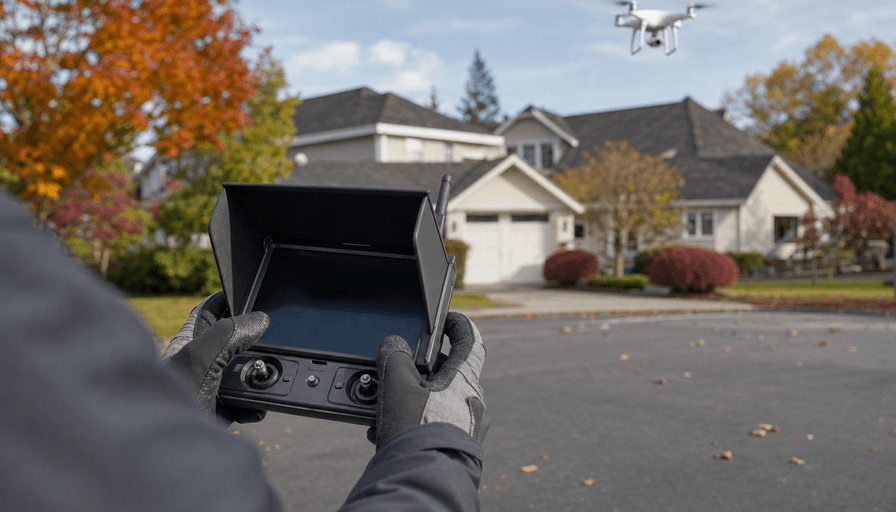
The best drone roof inspection software in 2026 might not involve a drone at all. For a lot of roofers and adjusters, the fastest path to a measured, claim-ready roof is a satellite or aerial report that costs $18 to $40 and lands in under an hour, no pilot, no aircraft, no FAA certificate. For everyone else, a flown drone plus processing software gives you fresh, high-resolution proof of damage that imagery on file can't match.
So the real question isn't "which software is best." It's whether you're bidding a reroof or documenting a claim, and whether you plan to fly at all. Get those two answers straight and the shortlist gets short fast. Below we break the market into the two camps that actually matter, name the tools in each, give 2026 pricing, and lay out what an insurance adjuster will accept when the check depends on it.
The first question: are you flying a drone at all?
Everything marketed as "roof inspection software" falls into one of two buckets, and buyers get burned when they shop across both at once.
The first bucket is flown-drone software. You, or a hired pilot, fly the roof, and the software stitches the photos into a 3D model, an orthomosaic, and a measurement report, often with AI that flags hail hits and missing shingles. DroneDeploy, SkyeBrowse, Loveland's IMGING, and Hammer Missions live here. You get current imagery and a defensible record of exactly what the roof looked like on the day you flew.
The second bucket is imagery-report software. There's no drone. Tools like EagleView, Hover, and GAF QuickMeasure pull from existing aerial or satellite imagery, or in Hover's case a smartphone photo scan, and hand you square footage, pitch, and a materials list. It's cheaper and faster, but the imagery might be months old, so it can't show damage from last week's storm.
If you're pricing materials for a bid, the second bucket usually wins on speed and cost. If you're documenting a claim or a defect that has to hold up later, the first bucket earns its keep. Most of this guide is about matching your job to the right bucket. If you're still deciding whether to inspect from the air at all, our explainer on how a drone roof inspection works covers the ground-level basics first.
Best software if you fly your own drone
Flown-drone software is where the "inspection" part really means inspection: you're capturing new imagery, not measuring old photos.
DroneDeploy is the enterprise workhorse. It handles large commercial roofs, produces orthomosaics and 3D models, and runs AI damage detection across the capture. Pricing starts around $329 a month, with annual plans commonly landing in the $1,000 to $3,000 range depending on seats and acreage. That floor only makes sense at volume, which we'll do the math on below.
SkyeBrowse takes a per-model approach that suits seasonal work. You pay roughly $99 for a standard processed model and $199 for the advanced tier, with no monthly minimum, so a roofer who flies heavily after a spring hailstorm and goes quiet in winter isn't paying for months they don't use.
Loveland Innovations (IMGING) and Hammer Missions both lean on automated flight and AI defect detection: ponding, cracking, missing shingles, thermal anomalies. Neither publishes public pricing, so you'll be talking to sales and quoting against your volume. IMGING in particular is built around a guided-capture app that helps less-experienced pilots fly a consistent grid.
Whatever you pick, the software is only half the setup. Flying a roof for pay means holding an FAA Part 107 remote pilot certificate, and the hardware matters. Most pros run a DJI Mavic 3 Enterprise with the RTK module for centimeter-level positioning, or the Mavic 3 Thermal with its 640 by 512 thermal sensor when moisture intrusion is the concern. If heat and water are your real targets, our rundown on thermal drone imaging goes deeper than any software feature list will.
Best software if you'd rather skip the drone
Here's the thing most roofers don't want to hear: for a straight measurement report, you probably don't need to fly at all.
EagleView is the incumbent. Reports run roughly $15 to $87 depending on report type and property size, generated from EagleView's own aerial imagery rather than your photos. That independence is the whole point for insurance work, which we get to next.
GAF QuickMeasure is the budget pick at around $18 a report, with delivery often inside an hour. For a contractor who just needs square footage and pitch to price a reroof, that's hard to beat.
Hover works differently. You, or the homeowner, shoot a set of smartphone photos, and Hover builds a 3D model with measurements. It runs about $25 to $99 per scan, or $99 a month on the Pro plan. It's the closest thing to a drone workflow that needs no drone.
None of these require a pilot, an aircraft, or a Part 107 ticket. The trade-off is currency: satellite and aerial libraries refresh on their own schedule, so if you need proof of what a roof looks like today, after the storm, you're back to flying. When the job is a bid rather than a claim, though, paying $18 to $40 for a report beats a $329 subscription every time. We break the full price picture down in our guide to what a drone roof inspection costs per roof.
What insurers actually accept
For adjusters, the software conversation is really a documentation conversation, and the bar is higher than "nice photos."
Two things move a claim. The first is independent imagery. Adjusters tend to accept EagleView measurements with little pushback precisely because they come from third-party aerial capture, not the contractor's own camera, which removes the "you photographed it to win the job" objection. The second is estimate compatibility. EagleView exports an ESX file that imports directly into Xactimate, and it supports Symbility, so the measurements flow into the estimating software adjusters already use without manual re-keying.
That doesn't lock out flown-drone reports, but it does raise the standard for them. If you fly, make the output claim-ready: georeference the model so measurements can be independently verified, use RTK for tighter positioning, and export in a format the carrier's system accepts. On accuracy, 2 to 6 inches is fine for a contractor bid, roughly 1 to 4 inches covers most damage documentation, and disputed or litigated claims are where sub-inch, georeferenced outputs earn their cost. If your work regularly ends up in front of a carrier, the ability to prove where a measurement came from matters more than any single feature.
Per-report vs subscription: run the breakeven
The pricing model, not the brand, is where most buyers overspend.
A subscription like DroneDeploy's $329 a month only pencils out once you're processing enough roofs to beat per-report pricing. Against a $38 competitor report, that's roughly nine paid reports a month before the subscription is the cheaper option. Below that, you're paying for capacity you don't use. Above it, the flat rate and the extra tooling start to pay off.
So the honest rule of thumb looks like this. If you're an adjuster or a low-volume contractor, buy reports one at a time (GAF QuickMeasure or EagleView) and skip subscriptions entirely. If your volume is seasonal, per-model credits like SkyeBrowse's let you spend in the busy months and pay nothing in the slow ones. Only steady, high-volume operators running their own fleet should be on a full DroneDeploy or IMGING subscription. I'd argue most small roofers who "invested in inspection software" would have kept more margin buying $18 reports as needed. If you'd rather not touch software at all, you can hire the whole capture through drone inspection services and get a finished report back.
FAQ
What's the best drone roof inspection software for a small roofing contractor?
For most small contractors, per-report or per-credit tools beat a subscription. GAF QuickMeasure (around $18) or EagleView cover measurement-only bids, and SkyeBrowse's per-model credits fit seasonal flying. Save the monthly subscriptions for when your report volume is steady and high.
Do I need a Part 107 license to use roof inspection software?
Only if you fly the drone yourself for commercial work. Imagery-based tools like EagleView, Hover, and GAF QuickMeasure need no pilot and no certificate because you're buying a report, not flying. The moment you put a drone in the air for pay, you need an FAA Part 107 remote pilot certificate.
What accuracy do insurance adjusters require for drone roof reports?
There's no single legal standard, but 1 to 4 inches is generally adequate for damage documentation and replacement-cost math. Disputed or litigated claims are where georeferenced, RTK-grade sub-inch outputs matter, because the measurement has to be independently verifiable.
Can I get a roof measurement report without flying a drone?
Yes. EagleView and GAF QuickMeasure generate reports from existing aerial or satellite imagery, and Hover builds a model from smartphone photos. Expect roughly $15 to $40 per report. The catch is currency: the imagery may be months old, so it won't show fresh storm damage.
How much does drone roof inspection software cost in 2026?
Imagery reports run about $15 to $40 each. Flown-drone processing credits run roughly $99 to $199 per model. Full subscriptions start near $329 a month and climb into the $1,000 to $3,000 a year range for annual enterprise plans.
The bottom line
Pick by role and volume, not by brand. If you're bidding a reroof, a $18 to $40 imagery report is usually all you need and it beats any subscription. If you're documenting a claim, favor independent imagery and Xactimate-ready exports, and make flown reports georeferenced so they hold up. And if you fly a lot, run the breakeven before you sign anything, because the software that saves a fleet operator money quietly bleeds a small contractor. Browse vetted drone service providers on DroneServices, or see drone pilots in Atlanta if you'd rather hire the flight out and just get the report.