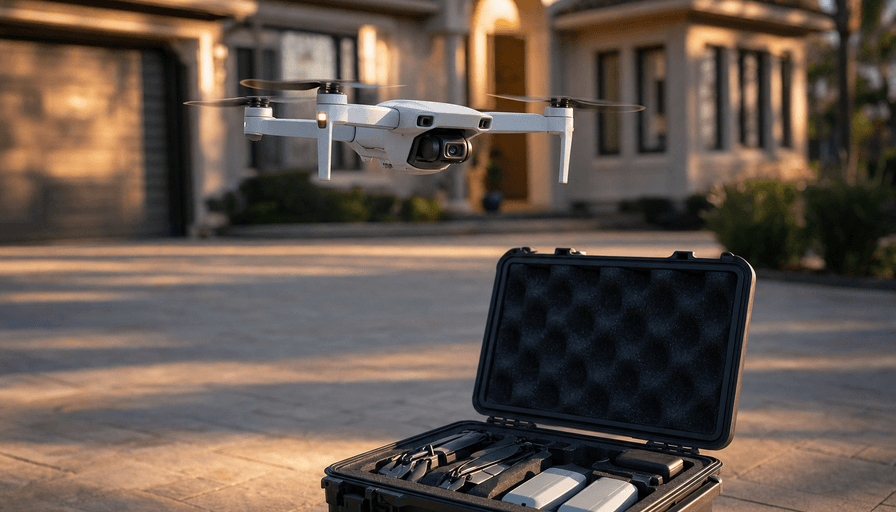
The best all-around drone for real estate photography in 2026 is the DJI Air 3S at $1,099. It pairs a 1-inch sensor with a useful telephoto lens, roughly 45 minutes of flight time, and obstacle avoidance good enough that you won't clip a chimney on your third listing. For most agents, that's the one.
But the spec sheets skip the part that actually decides this purchase. That drone can't legally photograph a single listing until you hold an FAA Part 107 certificate, and for a lot of agents, hiring a licensed pilot at around $250 a shoot is the smarter math. This guide covers the three drones that fit most real estate work, what it really costs to get airborne legally, and how to tell whether you should buy at all.
The short answer: three drones cover most agents
You don't need to compare fourteen models. Real estate photography rewards a clean wide shot, a stable hover in a light breeze, and a battery that lasts through a property without a swap. Three DJI drones cover that at three price points.
| Drone | 2026 price | Best for |
|---|---|---|
| DJI Mini 4 Pro | ~$759 | Budget, quick-turn content, sub-250g portability |
| DJI Air 3S | ~$1,099 | The all-rounder most agents should buy |
| DJI Mavic 3 Pro | ~$2,199 | Luxury listings and commercial work |
The DJI Air 3S is the pick if you're buying one drone and want to stop thinking about it. The 1-inch main sensor pulls clean detail in the low, gold-hour light that sells houses, the second 70mm camera lets you compress a shot without flying dangerously close to the building, and the battery outlasts a typical residential shoot.
The Mini 4 Pro is the budget answer, and a genuinely good one. It weighs under 249 grams, which keeps it below the FAA's recreational registration weight and makes it easy to throw in a bag between showings. The image quality won't match the Air 3S in dim light, but for bright-day exteriors and short social clips, most buyers can't tell the difference.
The Mavic 3 Pro earns its price only when the property does. Triple cameras, a variable aperture, and higher-resolution stills matter for a $4M listing or a commercial marketing package where the client expects magazine-grade output. On a standard three-bed, it's overkill.
Picks by budget tier
Under $800: DJI Mini 4 Pro (or Mini 5 Pro)
If aerial is an occasional add-on and not your main service, start here. The Mini 4 Pro at around $759 shoots 4K, holds position well, and has obstacle sensing on all sides, which matters a lot while you're learning. DJI's newer Mini 5 Pro sits near $799 if you want the latest sensor. The sub-250g weight is the real feature: less registration friction and a drone you'll actually carry. This is also the honest pick if you're hunting for the best budget drone for real estate photography and expect to fly it rarely.
Around $1,100: DJI Air 3S
This is the sweet spot, and the one I'd point most agents to. At $1,099 you get the 1-inch sensor, dual cameras, LiDAR-assisted obstacle avoidance for low-light returns, and enough flight time to shoot a full property without babysitting the battery. It's the smallest step up in this list that a client would actually notice in the final photos.
$2,000 and up: DJI Mavic 3 Pro
The premium tier is for people whose listings justify it. The Mavic 3 Pro's triple-camera system and larger sensor give you cleaner low-light performance and more room to crop and color-grade. DJI's newer Mavic 4 Pro is the better camera on paper, but it's hard to buy through official US channels right now because of the import situation below, so the Mavic 3 Pro is the safer premium purchase in 2026.
The non-DJI question and the 2026 import reality
Autel Robotics is the main non-DJI alternative, and its consumer EVO line competes with DJI's Air and Mini tiers on image quality. It's worth a look if you want to hedge away from DJI. Here's why that matters: as of 2026, DJI sits on the FCC's Covered List, which freezes new-model imports into the US. Drones authorized before late 2025, including the Air 3S, Mini 4 Pro, and Mavic 3 Pro, remain available and keep working normally. But newer releases are stuck in limbo, which is exactly why the Mavic 4 Pro is scarce here. Buy a currently-authorized model and you're fine; just know the ground can shift under this category.
The cost nobody quotes: getting legal
The drone is the cheap part. Using one to market a property is a commercial operation under FAA rules, which means the person flying needs a Part 107 Remote Pilot Certificate, even on your own listing. There's no hobbyist loophole for real estate.
Here's the real all-in cost before your first paid flight:
- Part 107 knowledge test: $175, plus a study course if you want one ($150 to $300)
- FAA drone registration: $5 for three years, and yes, commercial use requires it even for a sub-250g Mini
- ND filters, a spare battery or two, and a case: $200 to $400
- Liability insurance: budget for it, because property-damage claims are the real risk
Add it up and an Air 3S setup runs closer to $1,600 to $1,900 out the door, not $1,099. The certificate is good for 24 months and renews with free online training, so it's a one-time hit, but it's a hit the listicles never mention. We break the licensing path down further in our guide to the FAA Part 107 license for real estate.
Buy or hire? The math most agents get wrong
Now the question the spec sheets refuse to answer: should you buy at all?
Do the arithmetic. A licensed pilot charges roughly $150 to $300 to add drone coverage to an existing photo package, or $250 to $450 for a standalone aerial shoot, with edited stills and a short clip included. Call it $250 a listing. Against a real all-in cost of around $1,700 to buy and get legal, you break even at roughly six to eight shoots.
That sounds like an easy case for buying, until you count the parts that don't show up on the receipt. You're the one studying for the exam, learning to fly without hitting the gutter, editing the footage, charging batteries, and re-shooting when the light was wrong. A hired pilot shows up licensed, insured, and fast, and hands you edited files the same week. Their gear is usually better than what you'd buy, and their reel looks like it.
So the honest split. Buy if you're listing aerial-worthy properties most weeks, you actually enjoy flying, and you want full control of timing. The drone pays for itself and then keeps paying. Hire if you shoot aerials a handful of times a year, your listings skew luxury (where the quality gap is visible), or you'd rather not carry an FAA certificate and an insurance policy just to take a few photos.
For most agents I talk to, that second case is the reality, which is why we treat buying a drone versus hiring a pilot as its own decision. If you want the going rate in your market, see what a real estate drone shoot costs, or browse drone photographers in Atlanta to compare local pilots.
What actually matters in a real estate drone
Ignore most of the spec sheet. For property work, three things decide the photos.
Sensor size drives the shots that sell houses: the low exterior at dusk, the twilight look clients love. A 1-inch sensor (Air 3S) beats the smaller sensor in a Mini in exactly those moments. Obstacle avoidance keeps you from an expensive lesson near rooflines, trees, and power lines, and it's the difference between flying confidently on listing day and flying scared. Battery and portability decide whether you finish the shoot in one trip and whether the drone actually comes with you. Everything else, the extra flight modes and the marketing bullet points, is noise for this use.
FAQ
Do you need a license to fly a drone for real estate?
Yes. The FAA treats marketing a property as commercial use, so the pilot needs a Part 107 Remote Pilot Certificate, even on your own listing. The knowledge test costs $175 and the certificate is valid for 24 months. Flying a listing without it is a federal violation, not a gray area.
What's the best budget drone for real estate photography?
The DJI Mini 4 Pro at around $759 is the best budget drone for real estate photography. It shoots 4K, weighs under 249 grams, and has all-around obstacle sensing. If you only need aerials a few times a year, hiring a pilot usually costs less than buying and licensing your own.
Is the DJI Air 3S good enough for professional real estate?
For the large majority of residential listings, yes. Its 1-inch sensor and dual cameras produce professional-grade stills and video that clients won't distinguish from pricier gear. Step up to the Mavic 3 Pro only for luxury or commercial properties where the client expects the top of the range.
Can you still buy DJI drones in the US in 2026?
Yes. Models authorized before late 2025, including the Air 3S, Mini 4 Pro, and Mavic 3 Pro, remain available and keep working. DJI is on the FCC's Covered List, which blocks new imports, so the newest models like the Mavic 4 Pro are hard to get through official US channels. A currently-authorized model is a safe buy.
Is it cheaper to buy a drone or hire a pilot?
It depends on volume. A real all-in setup runs about $1,700 once you add the license, registration, insurance, and accessories, and a hired shoot runs around $250, so you break even near six to eight listings. Below that, hiring wins, and it saves you the license and the learning curve.
The bottom line
If you're buying, match the tier to how often you'll fly: the Mini 4 Pro for occasional add-ons, the DJI Air 3S for most working agents, the Mavic 3 Pro for luxury and commercial. Then be honest about the two costs the spec sheets hide, the Part 107 license and your own time, before you spend a dollar. Plenty of agents run the numbers and decide their listings are better served by a pro they can book on demand. If that's you, browse drone photography services and vetted pilots on DroneServices, or read our overview of real estate drone services to see what a full aerial package should include.